
For a long time, retail execution and field sales were treated as separate jobs.
One team focused on the shelf. They checked placement, took photos, and tracked compliance. Another team handled orders, relationships, and revenue. Even when it was the same person doing both, the tools behind those tasks were different.
That separation made sense when the processes themselves were simpler.
Today, it tends to create friction. A rep walks into a store and sees what needs to be done. The shelf is not fully stocked. A product is missing. There is an opportunity to reorder. The decision is immediate, but the systems are not.
Part of the work happens in one tool. The rest happens somewhere else. That is where the disconnect starts to show.
Why the Split Between Execution and Sales No Longer Works
On paper, it looks manageable. You capture what is happening in the store, then follow up with an order later. The two processes are connected logically, even if they are handled in different systems.
In practice, the gap between them creates small delays. Reps move on to the next visit. Details get lost. Orders are placed later than they should be. Sometimes they are not placed at all. What looked like a clean process turns into a sequence of partial steps.
This is not usually caused by a lack of effort. It is a result of how the workflow is structured. When observation and action are separated, the outcome depends on what happens after the visit, not during it.
What Changes When Both Happen in the Same App
When retail execution and field sales are handled together, the visit itself becomes the main unit of work.
Instead of collecting information and processing it later, the rep can act on it immediately. The system does not need to pass information between layers, because those layers are already connected.
This changes the rhythm of the workflow. Less follow-up is required. Fewer steps happen outside the visit. The process becomes easier to track because more of it happens in one place.
Not every team needs this level of integration. But for teams where merchandising and sales overlap, it tends to remove a noticeable amount of friction.
1. SimplyDepo
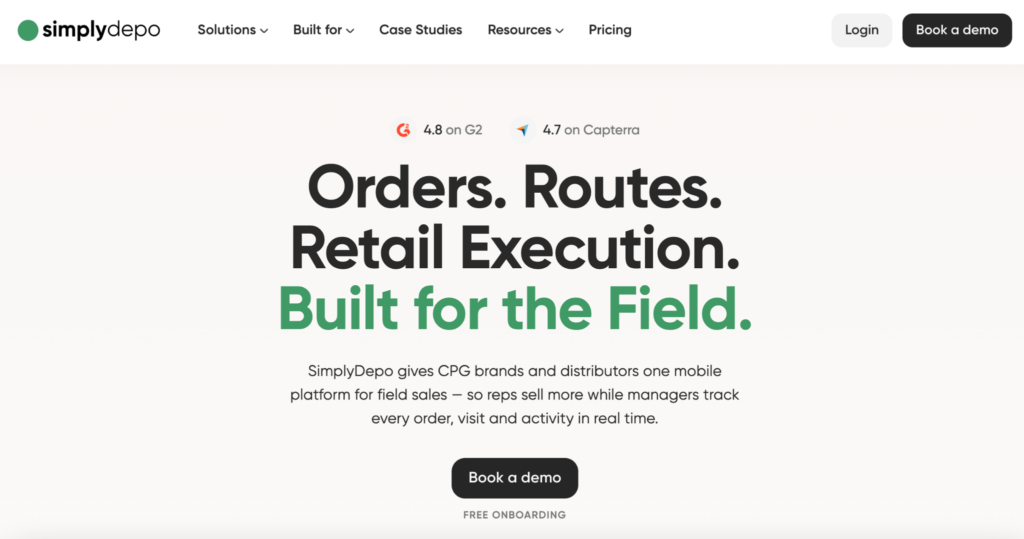
SimplyDepo is built around the idea that a store visit should not be split into separate phases.
The platform connects retail execution, order capture, and delivery workflows in a single environment. A rep can move from checking the shelf to placing an order without changing context.
The system includes:
- Shelf audits and planogram checks
- Photo reporting and visit tracking
- Order capture during store visits
- Route planning and delivery coordination
- Invoicing and accounting connections
What this changes is how decisions are handled.
Instead of recording issues and addressing them later, the rep can respond in the moment. That often leads to fewer missed opportunities and less follow-up work after the visit.
This setup works best for teams that combine merchandising, sales, and distribution. If those functions are already separated internally, the impact may be less noticeable.
2. Pepperi
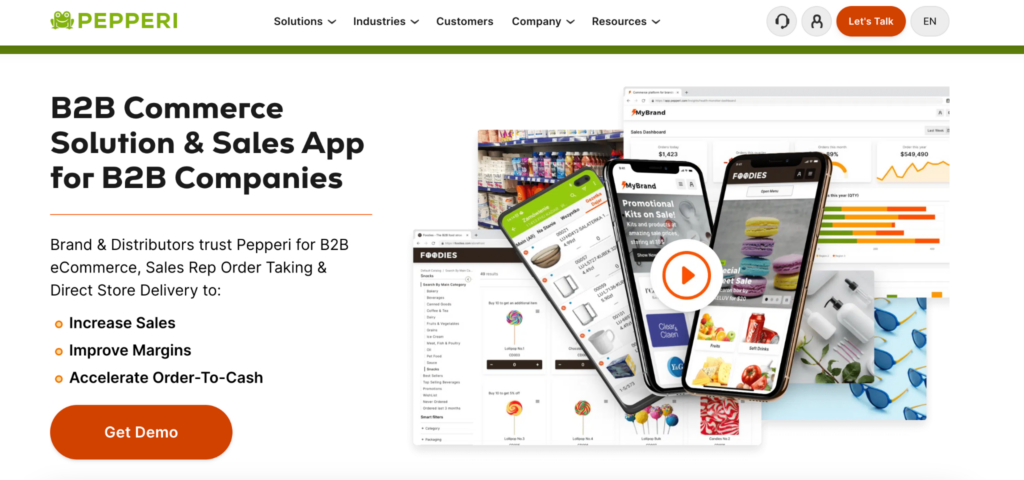
Pepperi approaches the same problem from a broader perspective.
It brings together retail execution, field sales, and B2B commerce into one system. This allows larger teams to manage multiple processes without switching between platforms.
The platform typically includes:
- Retail execution workflows
- Field sales and order management
- B2B ordering capabilities
- Distribution and route operations
This creates a unified structure across different functions.
The system is designed for organizations that operate at a larger scale. That can make it more complex to set up and maintain, especially for smaller teams that need something quicker to adopt.
3. Skynamo
Skynamo focuses more heavily on the sales side, but still connects it to field activity.
Reps can manage customer relationships and capture orders while they are already in the store. This reduces the need to return to the process later.
Its functionality includes:
- Mobile order capture
- Customer and visit management
- Offline operation
- Sales tracking
This supports real-time decision-making during visits.
Retail execution is present in a lighter form. Teams that need detailed audits or structured merchandising workflows may find that part less developed.
4. Orders in Seconds (OIS)
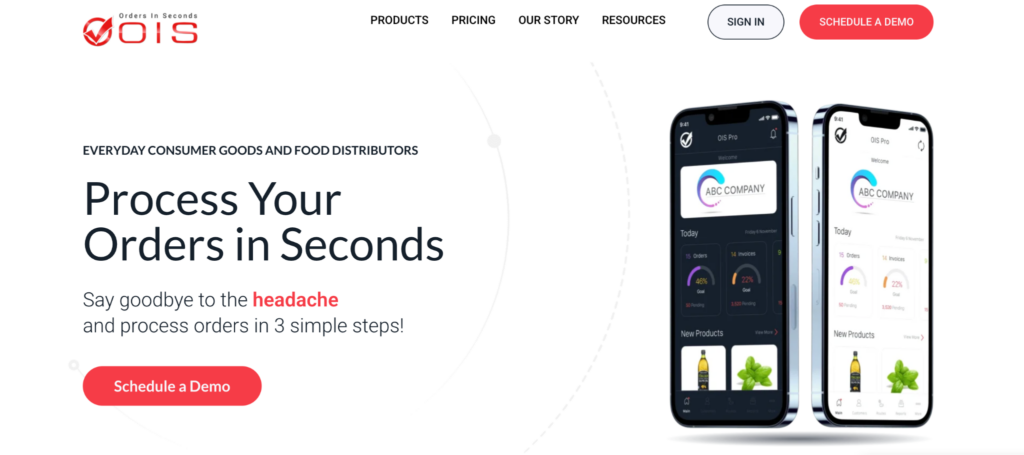
Orders in Seconds connects field sales with delivery workflows.
The platform is designed for teams that need to capture orders and move them quickly into fulfillment. It keeps the process close to the point where the decision is made.
It includes:
- Field order entry
- Integration with accounting systems
- Delivery tracking
- Customer account management
This helps reduce delays between order capture and delivery.
Retail execution is not a central focus. The platform works best when the main priority is moving orders through the system efficiently.
5. Repsly
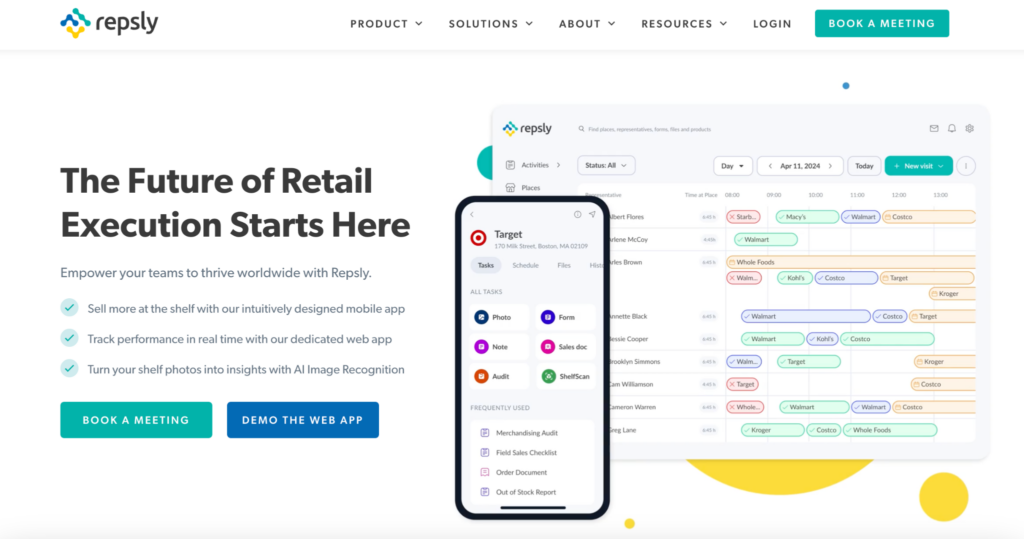
Repsly sits closer to the retail execution side, but still plays a role in connecting field activity with outcomes.
It helps teams structure store visits and maintain visibility across locations. While it does not handle orders directly, it provides the data that informs those decisions.
Its functionality includes:
- Store audits and task management
- Photo documentation
- Performance tracking
- Team activity monitoring
This creates a clear picture of what is happening in the field.
For teams that rely on separate systems for sales, this can still work. The connection between execution and sales exists, but it is handled across tools rather than within one.
What This Looks Like During a Typical Visit
The difference between these platforms becomes easier to see in a simple situation. A rep walks into a store and notices that the inventory is lower than expected. There is a clear opportunity to place a reorder.
In one setup, the rep documents the issue and moves on. The order is placed later, possibly in a different system.
In another setup, the rep places the order immediately. The information does not need to be transferred or remembered. It becomes part of the same action.
Both approaches capture the same information. Only one keeps the momentum of the visit intact.
When It Makes Sense to Combine Both Functions
Not every team needs to merge retail execution and field sales.
If merchandising and sales are handled by different teams with separate processes, keeping the systems apart can still work.
The need for integration usually appears when the same people handle both sides of the workflow.
When that happens, switching between tools becomes more noticeable. Small delays start to accumulate. Tasks that should be immediate turn into follow-ups.
That is where combining both functions begins to make a difference.
Choosing the Right Approach
The decision is less about features and more about how the work is structured. Some teams prefer a clear separation between data collection and sales. Others benefit from handling everything in one place.
The tools in this list reflect those different approaches. The key is not whether a platform supports both retail execution and field sales, but how naturally those parts fit together during an actual store visit.
That is what determines whether the system feels connected or still fragmented in everyday use.